A Conversation w/ Tyler Lyle
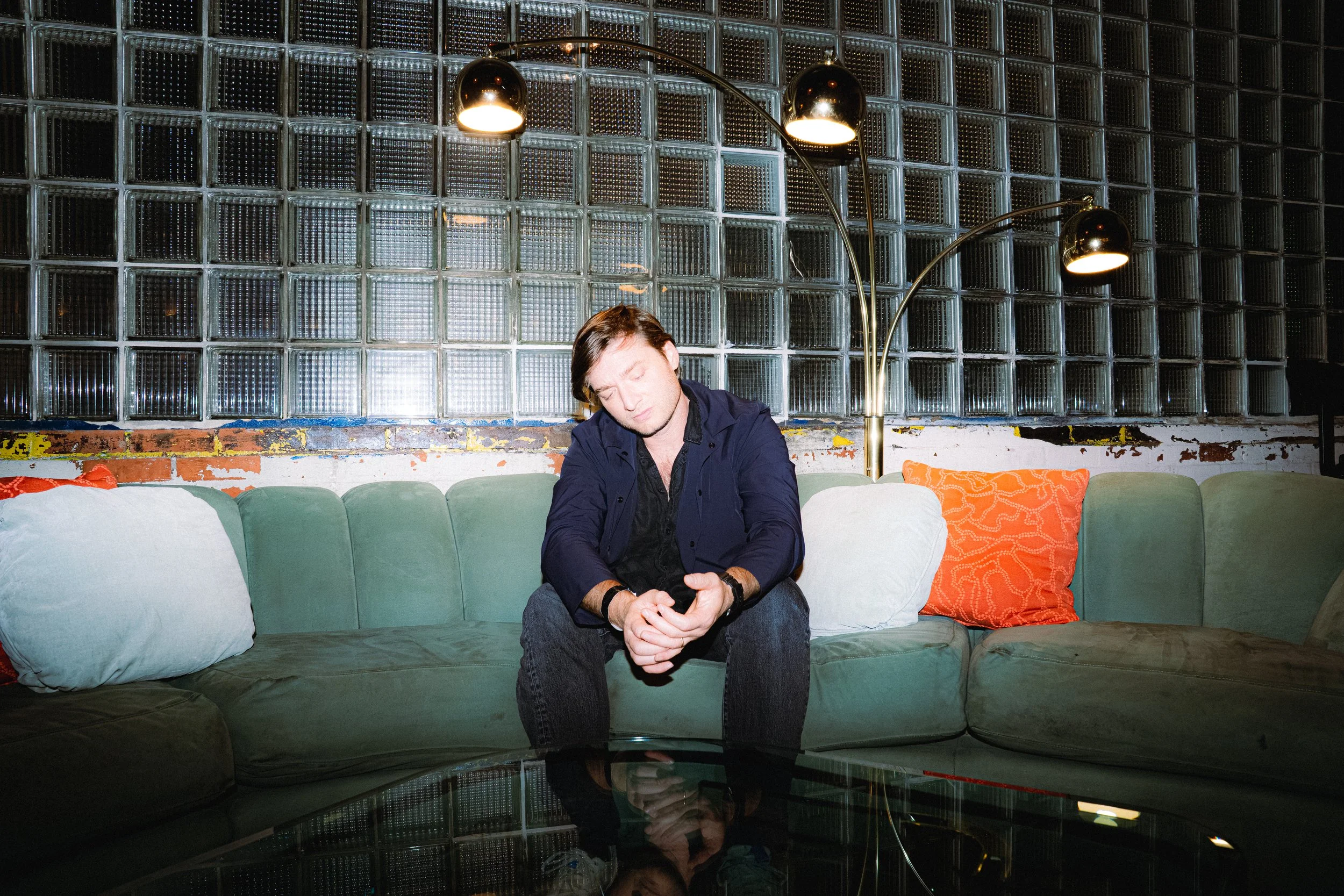
After seven years since his last solo album, The Floating Years, Tyler Lyle returns with The Transcendentalist, a deeply personal record shaped by fatherhood, love, and some of life’s most unexpected challenges. Known for his work as one half of The Midnight, Lyle steps away from the band’s signature synth-driven sound to reconnect with his singer-songwriter roots.
It's been seven years since your last solo album, The Floating Years. What made now the right time to return with The Transcendentalist?
Well I wanted to follow The Floating Years (a record about being stuck in place) with a large project, ideally self produced about crossing thresholds. Ironically the 40 or so songs I recorded for it seemed incomplete by the time my wife’s cancer diagnosis arrived and I set the project aside. When I came back to it, after a clean bill of health and a return to normalcy, I realized that I needed to put on my confessional singer songwriter hat (one that I’d mostly taken off since starting The Midnight) and tell my side of the story for once. I slimmed it down to the right ten songs, and it took me that long to put enough TLC on it to make it worth releasing.
The title The Transcendentalist suggests searching for something beyond everyday life. What does transcendence mean to you personally, and how does that connect to the album?
Transcendence is the admission that the self is not the final authority of the soul. It means that we paddle a tiny little boat in a big vast ocean, and sometimes, when we squint our eyes just right, we can see all the ripples glimmering in the water and know that they are just so.
This album blends acoustic instruments, electronic elements, and more cinematic arrangements. How did you decide what you wanted this record to sound like?
I picked my collaborators! As a singer-songwriter, you’re always at the mercy of your producer. Sometimes this has fared well for me and other times not. I wanted to work with Ben and Dan from Grouplove, and I wanted to have Rhett play guitar. That’s 2/3 indie rock and 1/3 Americana Blues Rock in the mix with my 20 years writing for country and synth wave and mainstream pop. It was meant to be a collaborative path to discover with each step, not a prescription. I like how the sounds came out as much as I enjoyed the process of discovering them, which is rare.
A lot of people discovered your songwriting through The Midnight, but your solo music has a different sound. What does your solo career allow you to express that you might not necessarily explore with The Midnight?
I see four posts of my musical foundation. The Midnight is big songs with big sounds and big lights and hands raised. The Midnight has the spirit of a rock band. The crowd is a hive of disembodied activity. The singer/songwriter stuff allows me to plan an acoustic guitar to an intimate room and tell my story person to person. That’s pathos and heart and connection. Another love is dance music. Another is using modular synths to meditate and cultivate stillness. The Midnight is spirit. The solo stuff is heart. The dance music is body. The modular synths are mind. They each serve to grow a certain part of the musical story, and they don’t ever compete, except for time.
How do you know whether a song belongs to The Midnight or your solo work?
My writing process is stochastic and fast. I write a lot of rough drafts. I’m curious and can throw a lot of ideas around quickly. Tim is much more calculated and deliberate, which means that his process is a lot slower than mine. When Tim has the bare bones of a sonic skeleton, I start to give it lyrical and melodic musculature (that I’m sometimes borrowing from my notes and sometimes writing fresh). It becomes a Midnight song on the next editing pass where the rough edges get smoothed by the collaborative process. Tim’s enthusiasm works as a filter. We simply don’t have time to create all the songs that are possible, so he tends to be the final filter.
The album was written during some major life changes, including marriage, fatherhood, and moving back to Georgia. How have those experiences changed the way you approach songwriting?
I mentioned this a bit earlier, but when I started writing with Tim, I’d already grown tired of the white guy with acoustic guitar confessional style of songwriting. My early work with Tim was to paint a detailed environment rather than tell a narrative story. It was my was of giving up on an overwrought sense of “genuine”—“authentic” artistry that was starting to feel too canned in the wake of the Mumfords and the Lumineers and all the bands I was starting to sound like. This album forced me back to that confessional style of songwriting because I feel like I’d learned the lessons that trying on a little neon synth mask could teach me. It was time to return with my voice as the narrator after a long leave of absence.
Your wife's experience with cancer is part of the story surrounding this album. If you're comfortable discussing it, how did going through that experience together change your perspective on life and the music you wanted to create?
Well I find it ironic that I thought my big 40 song project about crossing thresholds was supposed to be subtext about growing up and becoming a dad. Cancer was a curve ball. It turns out that the threshold is life and death, and during the year and a half that we were in the trenches with my wife’s health, my heart lived on both sides of that threshold. There are somethings you can’t come back from and view life the same way. Death is just a little closer to the surface in anything you do, which paradoxically allows life to be a little closer too.
Looking at the ten tracks, is there one song that feels especially personal or captures where you are in life right now?
Love Without Pain feels like a good song to capture the first 20 years of my artistic and personal journey. I feel like the narrator is just now arriving at where the river meets the sea, where All meets All and whatever comes next for both him and me, will arise from this expansive horizon in a new way. Right now feels wide open.
With The Transcendentalist being such a personal record, what do you hope listeners take away from it, especially those who might be going through similar changes or challenges in their own lives?
When we were going through chemotherapy, I took note of how many other people we knew were silently going through similar struggles. My son’s teacher passed from cancer that year. A friend got a terminal diagnosis. A family member was diagnosed, as was a neighbor, a former producer. Cancer impacts a whole lot of people, and sometimes those people aren’t initially open about it (for plenty of good reasons). My experience of going through it was so personally isolating, and what gave some relief was sharing my fears and struggles with others who were also caring for loved ones going through it. Nearly everyone has been touched by a similar kind of loss at some point or another. These songs are a kind of mutual support- my way of inviting others to open up and share their stories. While doing press for this record, because of its theme, I’ve been fortunate enough to have discussed very personal things with total strangers who feel permission to share their deep struggles and losses and hardships. This record for me was a kind of emotional digestion that I undertook so that it might invite others to use my work as a starting point to help them process some difficult to process things. parts of their life that they might not get to easily, and might not have the words when they do. That’s why I share such a personal experience in this way.
When you look back at the person who released The Floating Years in 2019, what do you think that version of yourself would find most surprising about who you are today?
This question reminds me of a quote I like from Joan Didion: “I think we are well-advised to keep on nodding terms with the people we used to be, whether we find them attractive company or not.“
The “Floating Years” Tyler was burdened by the question that was too painful to ask earnestly at the time: “will you ever actually grow up?” Today, however one marks the passage through the tunnel of adulthood, yeah. I did. I have. I grew up. I crossed some threshold somewhere. And whether that was fatherhood or my wife’s cancer or the pandemic or the modest success of The Midnight, I’ve arrived at this version of myself in due time with a little more discipline and a little more joy and a little more purpose than I thought possible when I was putting the last songs down on The Floating Years (released in 2019, but recorded in spring of 2018, weeks before my son was born). Hallelujah.
With The Transcendentalist, Tyler Lyle opens a deeply personal chapter of his musical journey, reflecting on love, uncertainty, change, and the experiences that have shaped him over the past seven years. Through honest storytelling and reflection, Lyle reminds us that sometimes the most meaningful songs come from the moments in life we never saw coming.
Stream The Transcendentalist, now available on all streaming platforms.